Showing posts with label Paraguay. Show all posts

Monday, 25 July 2011

Copa América review: BRAZIL

Now on to the five-time world champions, winners of eight... Ah forget it, they need no introduction. Let's talk about BRAZIL.

After a poor showing at the 2010 World Cup in South Africa, big changes had to be made to the Seleção with the next World Cup taking place on home soil in 2014. The CBF (the Brazilian football association) moved swiftly, sacking Dunga and bringing in ex-Corinthians and Grêmio boss Mano Menezes. The transformations brought about by Menezes have been well documented and I myself talked about this at length in a previous article over at BornOffside.net (shameless self-promotion, I know!).

Even with the public more focussed on preparing for 2014, anything other than victory still means disappointment in Brazil. This time, the Seleção were eliminated at the hands of Paraguay in the quarter finals after topping Group B. Things started slowly with two draws in their opening two matches, but they secured a vital 4x2 win over Ecuador in their final group game. In the quarter final, Brazil played well and were certainly the better team, but they failed to score and were beaten on penalties.

Mano Menezes' tactics (as touched on in my previous article) were to set up in a 4-2-1-3 formation and attempt to be more creative without relying on counter-attacks. The central midfield duo changed from Gilberto Silva and Felipe Melo to the much more athletic Premier League partnership of Lucas Leiva and Ramires. Santos' highly rated midfielder Paulo Henrique Ganso sits in the playmaking role behind the three forwards. Menezes tinkered with the shape a little, especially during the group match with Paraguay, but the strategy was generally the same.

Against Venezuela in La Plata, Brazil made a superb start and they were in control for the majority of the match. However, Venezuela's defensive midfield pairing of Rincón and Lucena grew into the tie and marked Ganso very well, forcing Brazil to alter their focus. Ganso's position was far too high for his role, meaning that Brazil struggled to link up their midfield and attack, the only direct link they had was the forward runs of Ramires. However that brought about its own dangers, as whenever Ramiers burst forward his midfield partner Lucas Leiva was left totally exposed to the counter attack.
Formations for Brazil x Venezuela [Note Ganso (10) playing very high, leaving the Brazil shape disjointed]
In the second half Menezes brought on Fred, Lucas and Elano to try and change the match, but the ended up relying on set-pieces and long balls and the match finished 0x0.

Against Paraguay, Menezes altered the formation a little, bringing in Shakhtar Donetsk's Jadson (whom Menezes trained in Internacional's youth team) for Robinho. This switch nudged the shape of the forward quartet a bit, resulting in something close to a slanted 4-2-2-2, the same formation used by Dunga at the 2010 World Cup. Jadson seemed like a good addition and he formed an impressive partnership with Ganso, the two combining well for Jadson to score the opening goal. Oddly enough, after a great first half performance Jadson was substituted at the half time break.
Menezes' standed 4-2-2-2
Going into the second half, it became plain to see that Brazil's defence were having an off day and Paraguay really started to take an advantage. Daniel Alves was particularly poor, exuberant winger Estigarribia gave him the run-around for the entire match. Paraguay scored twice and it looked like Brazil would be defeated until substitute Fred scored a last minute equaliser.

In the all-important final group match against Ecuador, Menezes went back to the 4-2-1-3 by reinstating Robinho at the expense of Jadson. Maicon also started ahead of Daniel Alves at right back after the latter's shocking performance in the previous match. The game was very open, with Brazil's attack playing well and looking like an improved version of the Venezuela match. Ganso played in a much smarter position closer to the midfield and Brazil managed to create chances and put four goals past Ecuador. At the other end of the field though, the centre back pairing and goalkeeper Júlio César looked very suspect. Júlio made some glaring errors and Ecuador managed to hit the back of the net twice as the game finished 4x2.

That three points meant that Brazil ended up winning Group B and progressed to the quarter finals to play the second best third-placed side, which happened to be a rematch with group rivals Paraguay. For that clash, Mano Menezes maintained the same side that defeated Ecuador and Brazil probably played their best football of the tournament, creating well and controlling the match.

The only problem was that they could not seem to score the opening goal and thanks to some heroic saves from Justo Villar in the Paraguay goal, the match stayed goalless throughout the ninety minutes and subsequent extra time. So, the decision went to a penalty shoot-out and everyone looked on open-mouthed as Brazil missed all four of their spot-kicks and were eliminated.

As I mentioned at the start of the article, anything less than victory spells great disappointment when it comes to the Brazilian national team, but it was hard to find many reasons to blame the squad for this particular exit. Granted the execution of the penalty kicks was an aberration, but throughout the match Brazil were the better team and played some really attractive football.

Something that was picked up on by the media outside of Brazil was the percieved failure of the Seleção's two big rising stars Ganso and Neymar. The Santos duo were hyped-up greatly before the tournament, but both only managed to display brief flashes of the quality that they do possess. Although something that has to be kept in mind when talking about their performances is that their inclusion in this tournament was purely about integrating the two into the national side, giving them tournament experience that will be invaluable when that all-important 2014 World Cup comes around.

Another promise for the future, Lucas Moura of São Paulo, was brought into the side and I am not completely sure thats this tournament turned out to be a particularly positive experience for him. Personally, I share the somewhat unpopular view that he should not have been in the squad for this tournament, instead he would have been better suited going to the U-20 World Cup in Colombia next month. There, Lucas would have been the main man in attack and the experience of leading that team would have been considerably more useful for him as opposed to some frustrating minutes off the bench for the senior side.

But it is back to business as usual for Mano Menezes and this Brazil side. As I write, the squad for Brazil's upcoming friendly against Germany has just been announced with six of the Copa América squad cut, and Brazilian eyes are all firmly fixed on the big party in 2014.

Sunday, 24 July 2011

Copa América review: ECUADOR

Continuing the series, still with the teams eliminated in the first stage, let's take a look at ECUADOR.

Just one point and two goals from three games represents a rather disappointing return for a side that qualified for both the 2002 and 2006 World Cups, but Ecuador went in to this tournament with fairly reduced expectations anyway. When speaking of Ecuador's present team in relation to the World Cup qualifying-teams, it is important to remember how huge an achievement that was at the time.

Ecuador traditionally had the reputation of being 'whipping boys' in the CONMEBOL section and could never seem to build a side strong enough to reach anywhere near World Cup qualification. An important change came in 1996 with the restructuring of CONMEBOL's World Cup qualifying system, moving to a round-robin format where every team would play each other home and away. This meant that the team played more competitive games, resulting in a more unified squad.

Currently managed by Colombian coach Reginaldo Rueda - the man who took Honduras to the 2010 World Cup - they appear to have assembled a decent squad with promising home-based players and some top talent with European pedigree. Manchester United's Antonio Valencia - the first Ecuadorian to play in a Champions League final - is the team's big name, but Rubin Kazan's Christian Noboa is also gaining notoriety on the European scene.

On the pitch, Rueda opts for a 4-4-2 shape with lots of movement amongst the midfield quarter. Cristian "Chucho" Benítez plays an energetic role up front, supporting centre forward Felipe Caicedo and shuttling back and forward into midfield. In their first game against Paraguay, Ecuador played fairly well and caused a great deal of problems for their opponents, but the game still finished 0x0.

The first half of that match saw Paraguay well in control, but an injury to Antonio Valencia forced Ecuador into making a half-time change which actually tipped the balance in their favour. Rueda brought on San Luís' exciting winger Michael Arroyo and played him on the left side, switching Édison Méndez to the right. The aggression of Arroyo managed to pin back Paraguay's enthusiastic right back Iván Piris, which meant that Ecuador's left back - team captain Walter Ayoví - could start to make an impact on the match.
Illustration of the tactical change in the second half (CLICK IMAGE TO PLAY ANIMATION)
In their second match against Venezuela, the story was largely the same. The match was tight and Ecuador again failed to find the net. Near the end Venezuela scored the winning goal, which was probably deserved considering how the match played out.

In contrast to their first two matches which were tight and low scoring, Ecuador's final group game against Brazil was wide open and had plenty of goals, finishing 4x2 to the Seleção. Rueda made one change from the side that played the second half against Paraguay and started against Venezuela, with defensive midfielder Oswaldo Minda coming in to replace Segundo Castillo.

Ecuador knew they had to win the match to qualify, so they pushed forward a lot more and managed to score twice against a poor Brazil defence. However on the other end of the field, Ecuador stood off Brazil far too much, giving them space and inviting their creative players to play.

All things considered, this was still an intensely disappointing tournament from Ecuador. With their dominant second half performance against Paraguay they were very disappointed not to come away with the win. Against Venezuela they fell to a late goal, and against Brazil they did very little to stop the strong attack of the five-time world champions.

There were some good performances from certain players, particularly Arroyo on the wings, and it appears that the forward pairing of Felipe Caicedo and Chucho Benítez are forming a great understanding. Despite this, it still seems like Rueda and his team have their work cut out to try and construct a team to rival the squads of 2002 and 2006.

Tuesday, 15 February 2011

Copa Libertadores preview

One of the most-watched football tournaments in the world, the group stage of the Copa Libertadores gets properly underway this week. The tournament has the same structure as the UEFA Champions League, in that there are eight groups of four teams, and the top two teams progress to the knockout rounds. In South America, all but two of the opening group games will take place this week, with Fluminense x Argentinos Juniors played last week (a 2-2 draw), and Independiente x Peñarol to take place next week.

So with 14 games, 28 teams, 11 nations represented and a stonking 49,000km to be travelled by the away teams, you could be forgiven for feeling a little bit out of your depth. However, have no fear, as we preview all of this week's action, game-by-game.

Tuesday 15th February

Vélez Sársfield x Caracas
Deportes Tolima x Guaraní
Deportivo Tachira x Santos
San Luis x Libertad
América x Nacional


First up we go to Buenos Aires, where Torneo Apertura runners-up Vélez Sársfield take on the 2009/10 Venezuelan champions Caracas. Both teams have just started the 2010/11 season in each of their respective nations, Vélez played out an exciting 2-2 draw with Independiente, while Caracas are 5 games in with a fairly poor 7 points. By all accounts this should be a pretty straighforward win for Vélez, as Caracas are not a team for them to fear, a far-cry from the side that shocked the whole of South America by reaching the quarter finals in 2009.

Next we go north to the west of Colombia, where Deportes Tolima play Guaraní of Paraguay in the Group 7 opener. There has been much talk surrounding Tolima recently, after famously eliminating Brazilian giants Corinthians in the qualifying rounds. It is generally accepted that Corinthians did not take their opponents seriously enough, and were caught off guard by Tolima's high tempo attacking play during the second leg in Ibagué. Los Piajos will have no such element of surprise tonight, as they take on a Guaraní side who will have prepared well for this encounter. It is imperative for each of these sides to take points off each other in this group, as with Cruzeiro and Estudiantes de la Plata widely expected to sail through in first and second spot, every point is absolutely vital for these other two sides.

We stay in the north of the continent for our next game, as the tournament's early favourites Santos begin their campaign with an away trip to Venezuela to take on Deportivo Táchira. Santos have made a good start to the season, sitting in second place in the Campeonato Paulista, while their opponents Táchira are in an interesting position, having already sealed their qualification to next year's group stages by winning the Apertura in Venezuela. O Peixe expect to start with Neymar up front, partered by either Keirrison or the impressive Maikon Leite. It will be Neymar's first appearence for Santos since winning the South American U-20 Championships in Peru. Santos will be looking for three points in what they hope will be a long and successful Libertadores campaign, while Táchira may just be hoping not to lose by several goals.

Finally we go to Mexico for the two late kick-offs, as San Luis host Libertad and América play Nacional in what is undoubtedly the game of the day. One factor in these games is the absolutely huge distances that the away sides have had to travel, Libertad have gone 6,600km from the Paraguayan capital of Asunción, while Nacional have travelled the longest distance anyone will travel in this year's Libertadores, a truly stunning 7,100km from Montevideo. The games themselves should be interesting affairs, Libertad will be aiming to get some points on the board early in Group 1, a group they are expecting to top. In the other match, every single point will be so valuable in Group 3, and with Fluminense and Argentinos Juniors playing out a 2-2 draw in the opening game, either of these sides will be desperate to sit in first place at the end of the week.


Wednesday 16th February

Unión Española x Universidad Católica
Cruzeiro x Estudiantes de la Plata
Emelec x Internacional
Jaguares x Jorge Wilstermann
Once Caldas x Universidad San Martín

Wednesday's action kicks off in Santiago with an all-Chilean affair as Unión Española take on Universidad Católica in Group 4. Although not a traditional rivalry, these two Santiago clubs will both be absolutely desperate for the points in this one. Group 4 looks like an easy win for the previously mentioned Vélez Sársfield, so these teams will regard each other as the direct competition for second place. It promises to be a good game of football, as both of these sides have an attractive, flowing style of play. Unión usually adopt a 4-2-1-3 with Uruguayan playmaker Ligüera pulling the strings behind the front three, while Universidad go for a more "Italian" 4-3-1-2.

Next is the game of the round, and arguably the game of the entire group stage, Cruzeiro x Estudiantes de la Plata. A replay of the 2009 final (Estudiantes ended up winners on that occasion), these are two of the biggest clubs in recent Copa Libertadores history. However Estudiantes will go in to this year's tournament without the coach that presided over their recent success (and the Libertadores win over Cruzeiro in 2009), Alejandro Sabella, who decided to leave his post last month. The shock of Sabella's departure may cause problems for the Argentine champions, however the talented and hard-working squad is still there, and they will be expecting nothing less than victory. I'm expecting a close game in this one, possibly a draw or perhaps Cruzeiro to sneak it by one goal.

While all the fuss is going on in Minas Gerais, the reigning champions Internacional begin their defence of the trophy in Group 6 away to Emelec of Ecuador. In preparation for this tournament, Inter have adopted an interesting strategy and are only using their B team in the Campeonato Gaúcho, choosing not to over-work their stars for the Libertadores and the Brasileirão. They should win this game and go on to qualify comfortably from the group, however I do not feel Inter have been anywhere near the same side that won last year's tournament.

After the 2010 success, praise was heaped upon Andres D'Alessandro, Tinga and super-sub Giuliano, while the invaluable play of winger Taison was somewhat overlooked, and he was sold to Metalist Kharkiv in the Ukraine. Since then, Inter have suffered from "possession without penetration" without a pacey, direct player like Taison. This frailty was exposed to the whole world in December, where they failed to make possession count and fell to TP Mazembe in the World Club Cup. In the recent transfer window, they neglected to replace Taison with someone of similar attributes, opting instead to sign two more Argentines, forward Fernando Cavenaghi and defensive midfielder Mario Bolatti, and Zé Roberto from Vasco. It is my opinion that if Inter try to play the same way as they have since last year, they will really struggle against any organised side. 

The other game in group six kicks off just afterwards, with Jaguares of Mexico hosting Bolivian side Jorge Wilstermann. Both teams are in interesting positions coming in to this year's tournament, the Mexican side have started very poorly in the 2011 Torneo Clausura which puts them in real danger of relegation this year, so they will most likely be focusing on improving their domestic form as opposed to preparing for continental competition. However Jorge Wilstermann are in an even worse position, finishing in last place in the second half of last year and finding themselves relegated to the second tier of Bolivian football. Understandably, Wilster will have their eyes on domestic promotion instead of Libertadores success, though their domestic campaign does not kick-off until June. Poor domestic form aside, Jaguares are clear favourites in this one, expect a good few goals for the home team.

The final game on Wednesday night takes place in Colombia, as Once Caldas take on Peruvian champions Universidad San Martín. This will be an extremely tough match for San Martín, as Once are very hard to beat at the Estadio Palogrande in Manizales, this superb home form being one of the main reasons for their surprise Libertadores success in 2004. San Martín will have a good go at it though, they have very little to lose as they do not exactly have a long history or large numbers of fanatic supporters. Their story is an interesting one, founded in 2004 by the local university (the Universidad San Martín de Porres), they have since won three Peruvian titles in their six short years in operation. They have a small support, mainly just students at the university, and their mascot is a man dressed as a tooth, a homage to the fact that most of their fans are studying dentistry.

Thursday 17th February

Léon de Húanuco x Junior
Grêmio x Oriente Petrolero
Cerro Porteño x Colo-Colo
Godoy Cruz x LDU Quito

Opening Thursday night's matches, we go to Peru with Léon de Húanuco taking on Junior Barranquilla of Colombia in Group 2. This is Léon's first appearence in the Copa Libertadores, after reaching the final of the Peruvian championships this year. Unlike the previously mentioned San Martín, Léon have a good number of fans, and they will be out in force on Thursday night to try and unsettle their Colombian opponents. This is an absolutely key game in Group 2, as with Grêmio expected to run away with the top spot, there are three fairly low-profile sides fighting for the second place. Additionally, this game should be quite an interesting tactical battle, with the home side adopting a 3-4-1-2 against Junior's favoured 4-3-1-2.

The other game in Group 2 kicks off right after, with group favourites Grêmio hosting Bolivian champions Oriente Petrolero. With the sale of their top-scorer Jonas to Valencia at the start of the year, there is definitely a big gap in this Grêmio squad. Also with replacement André Lima misfiring up front, it looks like they may struggle for goals this year. It is expected that Grêmio may find things tough in this year's Copa Libertadores, but they should not have any problems against the refineros from Santa Cruz.

Later we have one of the most important games of the round, one sure to attract a lot of attention from the two nations involves, as Cerro Porteño, the biggest club in Paraguay, take on Colo-Colo, Chile's biggest side. This promises to be a grand spectacle, with La Olla Azulgrana in Asunción bound to be full to the brim. I'm expecting a win for the away side, as they seem to have the better squad at the present time, all that remains to be seen is if they can overcome Cerro's home advantage. Keep an eye out for Colo-Colo's front two, Ezequiel Miralles and Esteban Paredes, a partnership that brings plenty of goals.

The last game of the week sees the Libertadores group stage come to the Argentine province of Mendoza for the first time as Godoy Cruz host Ecuadorian champions LDU Quito. You would be hard pressed to find a tougher game for Godoy Cruz to start their Libertadores story than against veterans and 2008 champions LDU Quito. A very organised and very hard to beat side, Liga de Quito will have their eyes on the trophy this year. At their home ground in Quito they are a huge challenge for any team thanks to their stadium being at such high altitude, and they pride themselves in their fitness and being able to stretch their opponents for the full 90 minutes, in high altitude or not. Godoy Cruz will have a very tough job in this one, but perhaps they can get a slice of beginner's luck.

So that's it! It promises to be a great week of Libertadores action, and hopefully reading this has given you a bit of useful background information. Regarding where to watch the games, in Europe, www.bet365.com will be showing every single Libertadores game this week through their Live Streaming service. It is completely free of charge and all you need to do is register on the site and you can get access to every Libertadores match this season, straight from your computer. For readers in the UK, you will be pleased to hear that the Copa Libertadores will be shown live on TV thanks to the new Premier Sports channel. They will broadcast Cruzeiro x Estudiantes on Wednesday night, check their website for more information. 

Wednesday, 2 June 2010

WC 2010: Whos Going? (Part 7)

NIGERIA

In my youth watching international football, Nigeria were always the top African nation. Names like Okocha, Finidi George, Amokachi, Babangida, Kanu and Oliseh were all big players in world football, and were all from Nigeria. However in recent times the “Super Eagles” have slipped down the African pecking order, illustrated best by their failure to qualify for World Cup 2006, at the expense of teams like first timers Angola and Togo.

Despite the disappointments, one cannot easily overlook Nigeria. They still have some excellent quality in John Obi Mikel, Obafemi Martins and Joseph Yobo, and with “nothing to lose” I expect them to have a real go at it this summer.

The new national team boss is former Sweden coach Lars Lagerback, who took Sweden to many big tournaments with relative success. His secure and intelligent tactics will be very important for Nigeria to achieve anything this year.

Nigeria are drawn into Group B in South Africa, this puts them up against Argentina, South Korea and Greece. As I’ve mentioned when talking about the other nations in the group, it is a close one. Argentina have quality, but there are real worries about their ability to play as a team, and the other sides appear quite closely matched. Nigeria will have a tough time trying to get out of the group, but they have a chance.

Star Man: Joseph Yobo

In a team which is known more for their quick and dangerous forwards, Everton’s Joseph Yobo at centre-half provides a required stability for the Super Eagles. Alongside young John Obi Mikel who plays in front of him in midfield, they form the defensive spine of this current Nigeria side.

Yobo has been generally regarded as one of the more solid centre-halfs in the Premier League in recent years, mainly down to his comfort in possession and superb pace for someone his size. He is an extremely important part of Nigeria’s squad and will feature heavily in South Africa.

Player to Watch: Chinedu Obasi

Obasi is a player who has been on the fringe of international selection for Nigeria the past few years. Earlier in the season, the Hoffenheim striker was called up to the squad for the African Cup of Nations at the last minute and rewarded his manager’s decision with some inspiring performances. He has now done enough to make the final cut for the Nigeria squad, and will attempt to continue his solid international progress.

Obasi (or “Edu” as he is often called) plays in an attacking role, usually just behind the centre forward or out on either wing. He is blessed with immense pace, on and off the ball, and his drive and determination will see him making forwards runs and then tracking all the way back to defend if needed.

He is in a similar mould to that of Carlos Tevez or even Franck Ribery, in that he can run at defenders all day long and cause constant threat. Nigeria is a tough team to play for at international level (the national pressure is unbelievable), but Obasi thrives on the pressure and always seems hungry to get as many games as possible. Now that the final squad has been announced, I am happy to see he will be on the plane, and ready to play a big part in the team.

Prediction: In a close group, potentially they could finish anywhere, but I believe South Korea have the quality to progress, and Argentina will prove too strong for the Super Eagles and Greece. Nigeria to go out in the group phase.

PARAGUAY

Another of the South American qualifiers, Paraguay will be looking to make a big impact on this year’s World Cup. Traditionally they have not been one of the most successful South American nations on the big stage, but with 2010 being their fourth consecutive Finals appearance, and with a talented crop of players and their best qualifying campaign in history, the Albirroja have the right to be optimistic.

However along with all of these positive points and improvements, Paraguay and the entire football world received some truly shocking news in January, when star forward Salvador Cabanas was shot in the head following an incident at a Mexico City nightclub. Fortunately since then Cabanas has been recovering well, and was almost in contention to be selected for the World Cup squad. Though he will not be appearing, the excellent news of his recovery will be sure to spur the Albirroja on during the Finals. I wish him all the best in his continuing recovery.

Paraguay have a pretty capable squad this year, they generally go for a standard 4-4-2 formation which has strength and balance. Their strongest area of the field seems to be their forwards, shown by the fact that even without Cabanas, Paraguay have chosen six strikers who will all be challenging for the two starting places. The assumed first choice would be Roque Santa Cruz (if he regains fitness) and Dortmund striker Nelson Haedo Valdez. However waiting in the wings are Benfica hitman Oscar Cardozo, Valdez’s Dortmund team-mate Lucas Barrios and young boys Édgar Benítez and Rodolfo Gamarra.

La Albirroja are placed in Group F alongside reigning champions Italy, Slovakia and New Zealand. In truth it is a pretty handsome draw for them. On their current form, Paraguay could potentially win every game in the group. Though I do believe Italy will be too strong for them, la Albirroja should make it through in second place.

Star Man: Nelson Haedo Valdez

With Santa Cruz struggling for fitness, Nelson Valdez will be Paraguay’s definite starting striker. He has really proved his worth to the national team over the years; he was one of the standout performers in an otherwise poor World Cup 2006 campaign, and his goals and good performances helped Paraguay achieve their greatest ever qualifying campaign this year.

Currently plying his trade for Borussia Dortmund in Germany, Valdez adopts a centre forward role and often drifts out to the left side to support his fellow Albirroja strike partner Lucas Barrios (we’ll talk about him later). Valdez’s greatest attribute is his energy and effort, though sometimes he has trouble directing that energy, meaning he can spend long periods of matches without making an effect on the game.

Valdez is quick, energetic, dangerous in front of goal, and he has the heart of a lion. He fights for every ball and comes up with some important goals for the national team. He will be a very important part of the team if they are going to have any success.

Player to Watch: Lucas Barrios

Just four months ago, Argentinian-born Lucas Barrios was scoring goals in the Bundesliga for Dortmund, and hoping for a call-up to Maradona’s Argentina side. However a lot can change in four months. Thanks to his Paraguayan mother, and after talking with his BvB team-mate the aforementioned Nelson Valdez, in March 2010 Lucas Barrios set about the process that would grant him Paraguayan citizenship. This now made him eligible for selection for the 2010 World Cup, and after much deliberation, manager Gerardo Martino called him up for the World Cup training camp in May.

Since then, Barrios has made his first two appearances for la Albirroja, picking up two goals in the process, and has now been chosen for the final 23-man squad for this summer’s finals. It’s a long way from four months ago when he was hoping to line up alongside Messi, Aguero and Tevez for Argentina.

His nickname la Pantera (the Panther), refers to his danger in the penalty area and top-notch acceleration. Barrios is a true penalty box striker, and his potency in and around the area has been an integral part in Borussia Dortmund’s pleasing 5th position at the end of this year’s Bundesliga.

Despite this success and reputation building, Barrios will have to work a lot harder than some of his national team mates to earn playing time in South Africa. Unlike his other home-grown team-mates, Barrios still has a lot of critics and doubters who don’t believe an Argentinian should be playing for the Paraguay national team. The reality is, that if Paraguay opt for the Valdez/Barrios partnership in South Africa, they will have a proven goal scoring, match winning and crowd pleasing combination.

Prediction: As they are quite an accomplished side, they have a fairly straightforward group. However they are in the hardest half of the draw, and their second round/quarter final opponents will be some of the best teams in the tournament. I expect them to exit in the second round.

PORTUGAL

Now I must warn you, this might turn into a little bit of a rant... Back at the very start of this blog, I posted some thoughts about Portugal (read here) and in all honesty my opinion has not changed. Portugal’s new Golden Generation aren’t proving as successful as their predecessors, their massive egos mean they don’t function well enough as a team. I mean c’mon, look at this result from last week, 0-0 against CAPE VERDE?!? I know it was a friendly and holds no real indication of how they will perform in South Africa but C’MON.

I’m not saying Portugal are a bad team, far from it, they have so much quality all over the field and I should be saying they have what it takes to win the trophy this year. I should, but I won’t. Sure if by the end of July, Portugal win the World Cup, manager Carlos Queiroz is named a national hero and Portugal hail their current Golden Generation as the greatest of all time, then I will eat my deserved slice of the humblest pie in town.

Queiroz’s squad selection is another thing that confuses me and I believe it is another thing that will work against their chances of winning. First of all, Pepe of Real Madrid has been chosen in the final 23-man squad. He’s a top player, no doubt, but he hasn’t played football since he was injured back in December, 6 months ago... Surely he has to have passed certain fitness tests to be included, so it’s not like Queiroz is bringing an injured player with him to South Africa, but I’m confident he is not 100% fit by any stretch of the imagination. However, with a quality squad like Portugal, bringing one player who isn’t fully fit is no problem right? Wrong. Pepe generally plays as a DMF (defensive midfielder or volante for Portuguese speakers) when he is with the national team, other players that usually play in that position for Portugal are Joao Moutinho (wasn’t chosen, rightly so) and Pedro Mendes (chosen, but has picked up an injury and is struggling for fitness). So this leaves Portugal’s DMF spot to two unfit players, with the rest of the midfield completely attack minded. Ay caramba Queiroz!

Also another quick problem with the squad selection: Ricardo Costa. I guess he is Queiroz’s godson or something. If you’ve seen him play and you have also seen Zé Castro play (the player who was dropped for R. Costa), then you will know what I mean. I don’t understand it.

Portugal are in Group G this summer, the “Group of Death”. There they will face Brazil (who I think will be champions), Ivory Coast (truly quality African squad) and Korea DPR (unknown quantity). Sure they will be expected to go through, and they might well do, but every game is a potential loss or win based on this inconsistent, frustrating, lacking, yet quality Portugal side.

Star Man: Cristiano Ronaldo

Now he’s one of the most famous players in the world, and rightly so as he is one of the best. I’ll be doing a separate post about him after the World Cup, to follow the Messi & Rooney articles, so I’ll keep this fairly brief.

We all know his abilities; he is lightning fast, capable of moments of magic, he has a vicious shot and his dribbling skills are probably the best in the world. For Real Madrid (and Manchester United before that) he has played world-class football with such consistency, rightfully putting him in the place he is now as one of the best in the world.

Unfortunately for the national team it is often a different story. He is the captain of the national team simply because he is the best player in the squad, and he’s no captain. He’s a flamboyant winger who can score loads of goals and turn the game around for his team, but the role he is asked to play for Portugal, being a “captain”, can sometimes put him under too much pressure and he has been visibly struggling for his country. For Portugal’s sake, they need a captain who is not just the most talented in the team, and then they can let Ronaldo be Ronaldo.

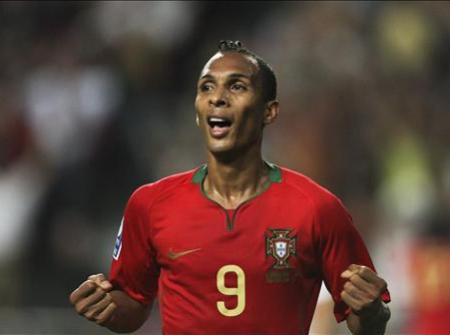
Player to Watch: Liedson

The post that I linked to earlier was when I was reviewing Liedson’s first game for Portugal since gaining his dual Brazilian-Portuguese nationality. Again I don’t want to keep going on about Portugal’s problems as maybe it is not as bad as all that, but Liedson is now one of the most positive things to come out of what was a tight and disappointing qualifying campaign.

Before the introduction of Liedson, Portugal were really struggling to find goals. They have so many talented forwards like Ronaldo, Nani and Simao, but no true centre-forward who could stay in the middle and convert all of the crosses that these world-class wingers would provide. Their old hope was Hugo Almeida, tipped as the new Nuno Gomes, tall striker, good in the air, and they hoped he would be the main goalscorer. But Almeida struggled, he really hasn’t lived up to his hype as of yet.

Enter Liedson, regular top scorer in the Portuguese league with Sporting, and now qualified to play for the national side. He provided just what Portugal needed at the end of that qualifying campaign, someone to get on the end of the crosses and someone to hover around in the area and make goals out of loose balls.

At 31 years old, Portugal will be wishing they had naturalised him sooner. He should be Portugal’s main source of goals this summer, and a key part in their success.

Prediction: In my opinion, the furthest Portugal can go is the second round. They could exit in the group stage, but I believe they will manage to see off the Ivory Coast and other opponents Korea DPR to finish second behind Brasil. But then they would surely face Euro 2008 champions Spain in the next round, and they are not going to beat them.